- City Fajr Shuruq Duhr Asr Magrib Isha
- Dubai 04:20 05:42 12:28 15:53 19:08 20:30
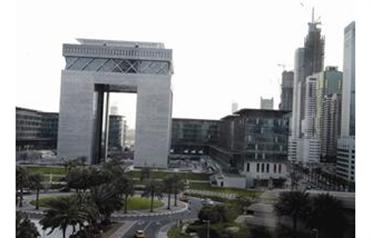
Among the 40 cities, 9 have been new additions in this year's report. (SUPPLIED)
Helped by investments and push towards making it a smart city, Dubai and Abu Dhabi have been incorporated among the world’s most ICT matured cities in terms of leverage from ICT investments in economic, social and environmental development, according to Ericsson’s 2014 Networked Society City Index released today.
Among the 40 cities, 9 have been new additions in this year's report including Dubai, Abu Dhabi, Muscat, Berlin, Munich, Barcelona, Athens, Rome and Warsaw. Among these, Dubai and Abu Dhabi have been ranked at No. 22 and 23, respectively, in the index, ahead of Athens, Sao Paulo, Beijing, Istanbul, Shanghai, Johannesburg, Mexico City, Buenos Aires, Muscat, Manila, Jakarta, Cairo, Delhi, Mumbai, Lagos, Karachi and Dhaka.
Dubai has been pushing to become a smart city and the emirate’s inclusion in list of the most ICT matured cities is the first step in that direction.
Last year, Dubai announced a project to transform the emirate into a ‘Smart City’, linking the emirate’s government services and the public through the use of smart devices accessed freely using high-speed wireless internet connections.
The strategy features six key pillars and 100 initiatives on transport, communications, infrastructure, electricity, economic services, urban planning. Under the strategy, 1,000 government services will go smart in the next three years.
The top five cities – Stockholm, London, Paris, Singapore and Copenhagen – remain the same, though Paris has now surpassed Singapore to take the number three slot. Helsinki has been ranked No. 6 followed by New York, Oslo, Hong Kong, Tokyo, Los Angeles, Seoul, Taipei, Munich, Miami, Berlin, Moscow, Barcelona, Sydney, Warsaw and Rome.
One of the key findings from the report is the fact that cities with a low ICT maturity tend to be improving their ICT maturity faster than high performing cities, indicating a catch-up effect. Many cities also have the opportunity to leapfrog others by avoiding expensive and increasingly obsolete physical infrastructure and instead moving straight into innovative applications using advanced mobile technology, Ericsson said.
“Cities will be the major arena in which ICT can bring solutions for economic, social, and sustainable growth,” said Patrik Regårdh, Head of Ericsson's Networked Society Lab.
“Today, we are seeing so many new opportunities which are more or less provided by ICT. The way that cities are lead is increasingly built on ICT to provide efficiency and innovation, in basically all areas of a city, from health care to transport to utilities,” added Monika Byléhn, Networked Society Evangelist and driver of City Life at Ericsson.
The report also made three predictions about the urban future derived from new technology and ICT solutions and applications:
- Smart citizens: People rather than institutions will drive urban progress to a larger extent, with more open public services and governance approaches characterizing this power shift.
- GDP redefined: By moving toward a more collaborative and sharing economy, ICT solutions will provide opportunities to create more value from fewer resources, therefore necessitating an adjustment of GDP to mirror the values important for a sustainable society.
- Power of collaboration: Tomorrow's networking organizations will be more flexible and efficient thanks to collaboration. Therefore the prevailing conditions of city management will also evolve, requiring changes in legislation and governance.
 Follow Emirates 24|7 on Google News.