- City Fajr Shuruq Duhr Asr Magrib Isha
- Dubai 04:20 05:42 12:28 15:53 19:08 20:30

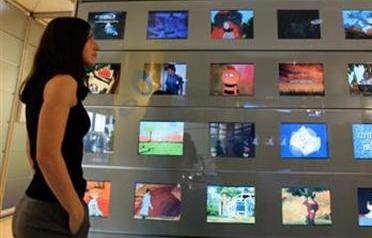
Al Azhar channel launches four new language services . (REUTERS)
Television channels in the Arab World are financed by large businesses and they subsequently influence decision making in the content management.
This was the opinion of prominent TV talk show presenters interviewed by Emirates Business on the sidelines of the two-day Arab Media Forum in its ninth session inaugurated yesterday in Dubai.
Motaz Damerdash, the renowned talk show presenter of 90 Minutes on Al Mehwar independent TV channel, said that more than any time in the past, the media facilities are attracting businessmen as they see the sector as a rewarding proposition.
In addition, the media sector is in need of sound financial supporters because of the continuous development in the television production and broadcast technology across the world.
The government-owned TV channels are, in many cases, unable to meet the cost of transforming their signals into the digital format and upgrading the operational facilities and tools.
This situation has prompted some businessmen to establish TV channels, which has given a rise to conflict of interests between the investors and the broadcasters, said Damerdash, adding: "Businessmen owning TV channels have invested in media to serve their own interests."
He said investors are using TV channels for networking purposes, and to complicate the matter further, they intervene directly in decision making process of running the channels.
"This is wrong from professional perspective as media should always maintain objectivity and project the actual community status without any prejudice," he noted.
Al Damerdash stressed the need to ensure separation between the administrative and the content management in private TV stations to ensure neutral, efficient and competent TV media in the Arab World.
"I am aware that my view point is very ideal but it should be adopted to ensure honest TV media that is capable of reflecting the status of the Arab World with the aim to help achieve development and prosperity," he added.
To achieve this objective, TV presenters should be held accountable. Professional ethics and career portfolio should be assessed and wrong practices should be penalised, he said.
"I suggest setting up of a regulatory authority with a set of professional code to assess and hold TV professionals accountable in order to help have clean the broadcast media," he said.
Zahi Wahbi, prominent presenter of the Future TV's popular show Khalleek fil Bait or Stay at Home, said that the status of the Arabic TV channels reflects the social, economic and political situation in the Arab world.
"In some instances, the social, economic and political situation is somewhat regulated, whereas in other cases the situation is very confusing and is in a complete mess. So is true for the TV channels. Some of them are very well organised , while others are in a complete mess," he sad.
However, there are good examples of successful TV stations and shows. "I am not a person with a self-inflecting guilt. I would rather encourage good and successful examples."
Talking about professional ethics, Wahbi agreed that there should be an ethical code that TV presenters should abide by. "Unfortunately, there are some presenters, I will not name them, whose sole intention is to achieve success on the account of their guests and through embarrassing them to the extent they make them cry on air. I am strongly against such presenters and I believe such practices are unethical."
Wahbi said in his successful career of more than 14 years as a TV presenter no guest was embarrassed by him. "I do respect the emotional and human side of my guests and never attempt to achieve success on their account."
 Follow Emirates 24|7 on Google News.