- City Fajr Shuruq Duhr Asr Magrib Isha
- Dubai 04:20 05:42 12:28 15:53 19:08 20:30

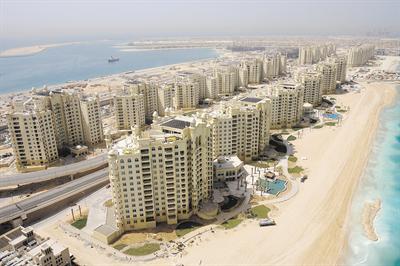
Report calls for a capital gains tax on investors buying and selling properties within 12 months. (SUPPLIED)
Off-plan housing properties in Dubai are showing signs of overheating due to "ultra loose monetary conditions", which trigger excessive speculation, Standard Chartered Bank said in a sector report.
As a measure to cool the market, the bank suggested that Dubai should take steps to weed out short-term investors, such as introducing a capital gains tax on properties sold within a year of purchase, or risk a correction.
However, long-term outlook for housing market remains positive, it said.
"Excessive short-term speculative activity has been further triggered due to loose monetary policies that have resulted in excessive liquidity in the market with investors seeking to purely leverage from their invested property, especially when it comes to off-plan housing properties," said Marios Maratheftis, Regional Head of Research Middle East, North Africa and Pakistan Global Markets for Standard Chartered Bank.
"Investors are willing to leverage up at a considerable cost in order to take short-term positions, "flipping" their properties before their installments are due," he added.
In March, Standard Chartered Bank recommended tightening monetary policy as a way of preventing speculation on the housing market. This is still necessary, but no longer sufficient.
Given the signs of overheating in off-plan properties, policy response would now have to go beyond prevention and directly address speculative activity, said the Standard Chartered Bank report titled "Dubai – A tale of two housing markets" based on study conducted by Standard Chartered Bank on 250 off-plan and ready properties across Dubai.
Dubai's real estate market is underpinned by strong fundamentals. Demand is outstripping supply and rental yields are high.
The report further called for penalising short-term speculators, without affecting long-term investors who position themselves to benefit from the long-term positive prospects of Dubai's property market.
Two possible ways to achieve this is by changing the payment structures and also taxing capital gains made on properties that are being bought and sold within a period of 12 months, with investors who buy and hold for longer than 12 months being exempt from the capital gains tax.
Dubai's authorities are already responding by improving regulation. The introduction of a property court is such an example. More is needed, and an additional option would be the introduction of a capital gains tax for any re-sale of properties, which takes place in less than a year from purchase, said the report.
"We are recommending a 50 per cent tax on buying and selling on properties less than 12 months," said Maratheftis.
In addition, the authorities can regulate the payment plans offered by developers.
This would discourage short-term speculative behaviour, which can be destabilising, while at the same time encourage long-term investors who are ready to take advantage of the long-term positive fundamentals of Dubai's economy in general and the housing market in particular.
Dubai's favourable economic environment is making it an attractive destination. According to government statistics, compounded annual growth rate (CAGR) of Dubai's population between first quarter 2007 and first quarter 2008 recorded a 7.6 per cent increase.
This number represents 110,000 new comers a year.
Assuming that the average expatriate household is 2.5 persons, similar to EU households, 44,000 units should be ready and available each year just to keep up with population growth.
Currently, the majority of new residential supply is on the high-end segment, more specifically apartments. But the market for villas and the middle-class segment is still vastly under supplied and this will be the case for years to come. As far as fundamentals are concerned, both the economy and the housing market are in good shape, added the report.
"We have also constructed an econometric model that can help explain property prices. The most interesting finding of our model is that completed properties do not trade at a premium to off-plan properties further re-instating the speculative interest on under-construction properties in Dubai," said Maratheftis.
When developers launch properties, usually before construction begins, they only release a limited number to the market. These properties are then traded on the secondary market. At a later stage, developers release another tranche to the market. There are now several cases of properties in which the primary prices of newly launched tranches is actually higher than the prevailing prices in the secondary market. "In other words, it is cheaper to buy the same properties that were launched a few months before from the secondary market than buy at the launch of new tranches in the primary market," said Maratheftis.
"Yet, investors rush to launches, properties sell at these launches fast because developers generally offer better and enticing payment structures, allowing the buyer to put five per cent to 10 per cent down-payment as a deposit and further payments to be made regularly until completion and delivery," he said.
When investors buy from the developer, they only pay a small initial amount. Buying in the secondary market means the buyer has to take over the payment plan of the first buyer, which makes the initial payment higher.
"These premium are not negligible. We estimate, for example, that in many cases the premium can be higher than 50 per cent. We see this as the price investors are willing to pay in order to leverage up," said Maratheftis.
The desire to leverage up in the off-plan housing market and the premium it has invoked is a significant sign of speculative activity.
"Essentially if a property goes up in value by 10 per cent and an investor has only paid 10 per cent of the price as deposit, the return the investor makes is actually 100 per cent. It is very common to see investors taking positions in the market with the intention to flip it before further payments are due. In many cases, investors have no intention whatsoever of actually owning a property. Their presence in the market is simply a short-term position based on leverage in order to make a quick and substantial profit," he said.
The report said that buying a completed property for short-term speculation is difficult, given that the full price for the property needs to be paid to the seller.
IMPOSE CAPITAL GAINS TAX
Dubai now needs direct measures to tackle short-term speculation. Introducing a capital gains tax on properties could be such a measure. The tax will aim to discourage short-term speculative transactions and at the same time allow long-term investors to benefit from strong economic and housing market fundamentals.
In order to be a deterrent, the tax needs to be high enough, for example, in excess of 50 per cent and should only be applied to the properties that are being bought and sold within a period of 12 months.
Sellers who keep their properties for more than 12 months should be exempt from this tax.
In addition to the capital gains tax, the authorities can also consider regulating the current payment plans developers offer to buyers. Initial deposits, for example, can be raised to 20 per cent of the purchase price from five per cent to 10 per cent with potential buyers also having to provide proof that they are able to finance the remaining 80 per cent of the property price either through existing funds or an approved mortgage agreement.
This will ensure that buyers can afford to pay the full price of the property and are not simply paying a 10 per cent deposit for a short-term profit.
 Follow Emirates 24|7 on Google News.